
NG Volt™ is an app for professionals involved in the electrical construction industry. It uses generally accepted point-to-point electrical distribution system calculations to create accurate results for all of your electrical construction projects.
NG Volt™ includes the following detailed electrical calculations:
1. AC Voltage Drop
2. DC Voltage Drop
3. Short Circuit Fault Current
4.Transformer Let-Through Fault Current

NG Volt™

With appropriate user input, NG Volt™ can provide organized calculations, from the utility point of service, through feeders and system transformers, and to the furthest panel board locations.
The calculations allow designers, plan checkers, and installers to accurately determine electrical circuit and equipment ratings to provide safe installations in compliance with code.
NG Volt™ makes performing AC and DC voltage drop, short circuit current, and transformer let-through current calculations more accessible, easier and faster than other methods, and with less chance for error. The tabulated results can be quickly exported to a PDF document to be shared with permit authorities or placed directly into construction documents.
The intuitive input fields and screen results tabulation make it easy to change values on the fly or modify parameters to see the impact of different scenarios.
Have questions about NG Wire™ ?
Visit NG Wire FAQs.
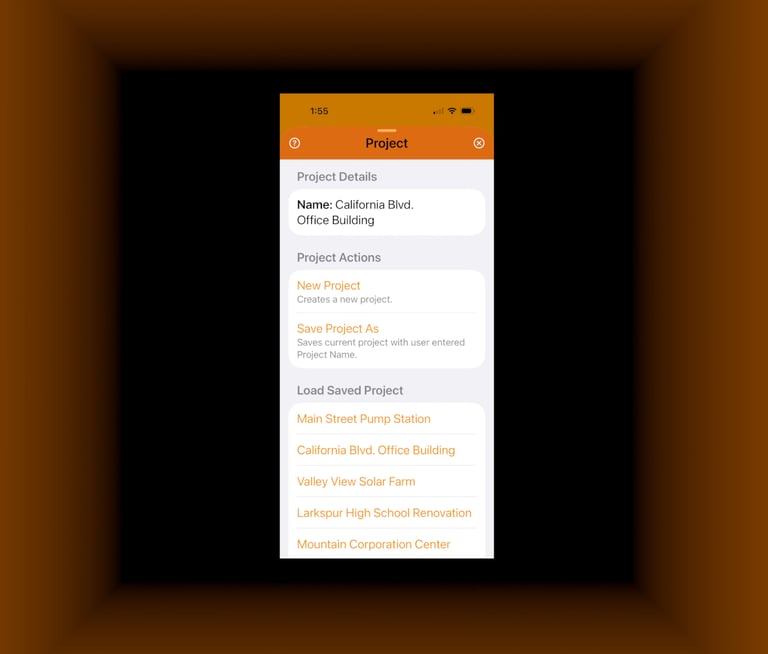
Project Details
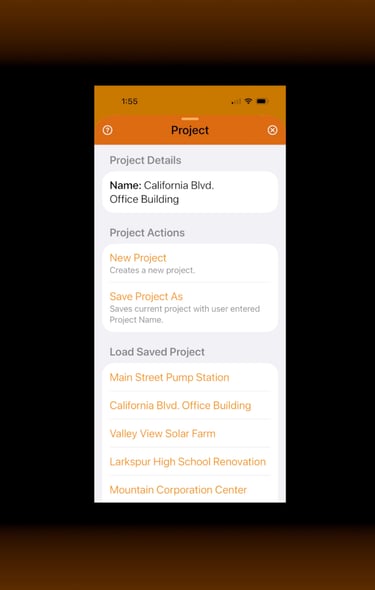
NG Volt™ allows the user to save any group of calculations as individual “Projects” for easy future reference and ongoing modifications. All project sets of calculations are automatically accessible across all of your iPhone® and iPad® devices that are signed in with the same Apple® user ID.
Any number of new projects can be created, or existing sets of calculations can be saved as a new project. The list of projects is easily available to edit or re-order and allow quick access to any set of saved calculations to print or export from the app.
AC Voltage Drop Calculations
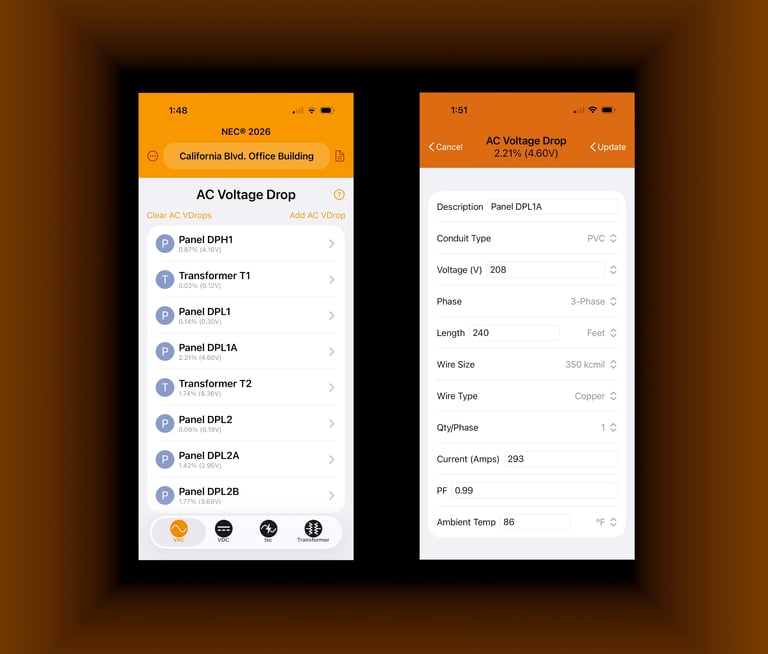
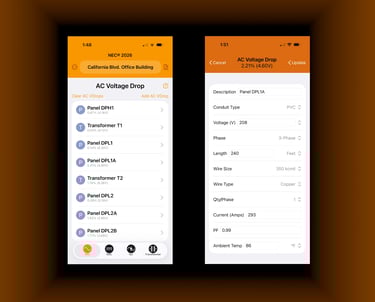
The AC voltage drop calculations consider the following physical properties and engineering parameters of each feeder or circuit, to provide results for the installed conditions:
1. Conduit Type
2. AC Supply Voltage
3. Phase
4. Length
5. Wire Size
6. Wire Type
7. Quantity per Phase (for parallel conductors)
8. Circuit Current
9. Power Factor (from -1.0 leading to +1.0 lagging)
10. Ambient Temperature (°F or °C)
The results are displayed in both percentage of AC supply voltage and the actual AC voltage drop along the length of the feeder or circuit.
DC Voltage Drop Calculations
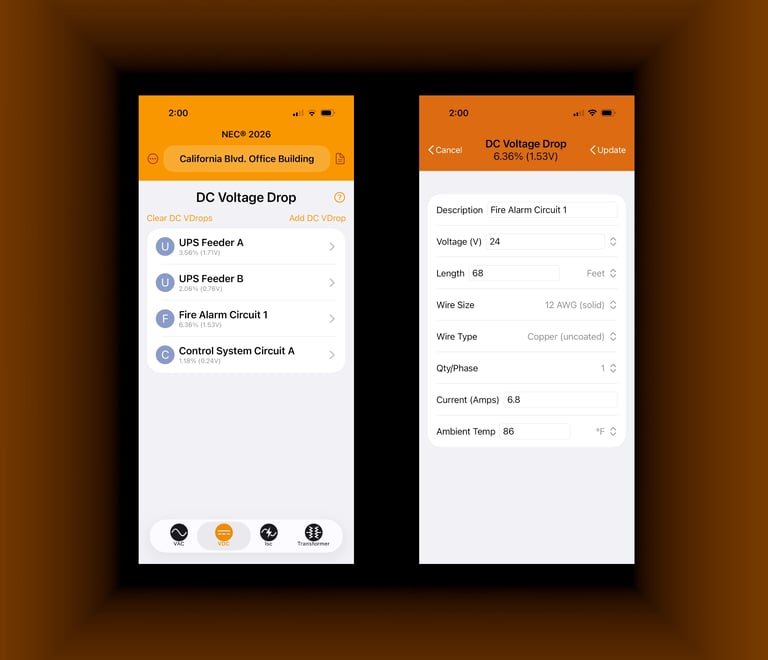
The DC voltage drop calculations consider the following physical properties and engineering parameters of each feeder or circuit, to provide results for the installed conditions:
1. DC Supply Voltage
2. Length
3. Wire Size
4. Wire Type
5. Quantity per Polarity (for parallel conductors)
6. Circuit Current
7. Ambient Temperature (°F or °C)
The results are displayed in both percentage of DC supply voltage and the actual DC voltage drop along the length of the feeder or circuit.
Short Circuit Fault Current Calculations
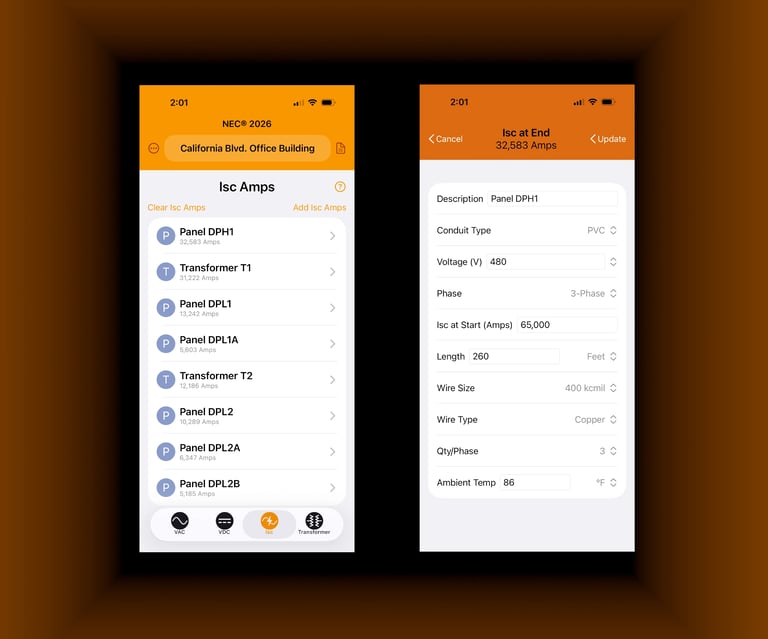
The short circuit fault current calculations consider the following physical properties and engineering parameters of each feeder or circuit, to provide results for the installed conditions:
1. Conduit Type
2. AC Supply Voltage
3. Phase
4. Available Fault Current at Beginning of Feeder or Circuit
5. Length
6. Wire Size
7. Wire Type
8. Quantity per Phase (for parallel conductors)
9. Ambient Temperature (°F or °C)
The results are displayed as the short circuit fault current at the calculated point on the feeder or circuit.
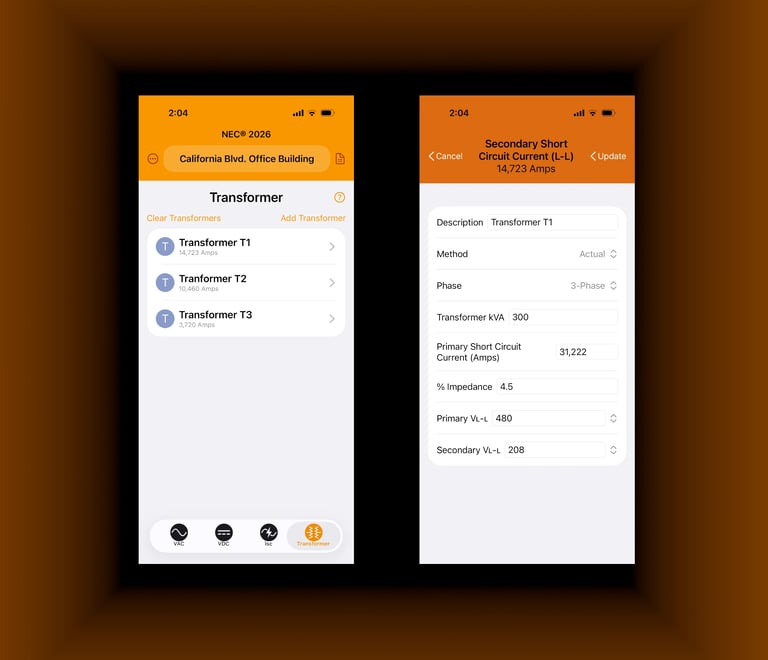
Transformer Let-Through Fault Current Calculations
The transformer let-through fault current calculations consider the following physical parameters of each transformer, to provide secondary fault current values for the equipment ratings to be installed:
1. Methd of Calculation (Actual known value or Infinite Bus)
2. Transformer Phase (1-Phase or 3-Phase)
3. Transformer kVA Rating
4. Transformer Available Primary Short Circuit Current
5. Transformer % Impedance
6. Transformer Primary Voltage
7. Transformer Secondary Voltage
The results are displayed as the transformer short circuit let-through fault current at the secondary side of the transformer.
Calculation Output
NG Volt™ allows the user to instantly create tabulated PDF results per project, that can be printed or exported via your Apple® device. The output can be shared with permit authorities or placed directly into construction documents to show voltage drop compliance and fault duty calculations.
The calculation results can be manually organized into any order for export and can be customized to include or exclude table grid lines, page footer information, and display of the reference formulas used in the calculations, if needed.

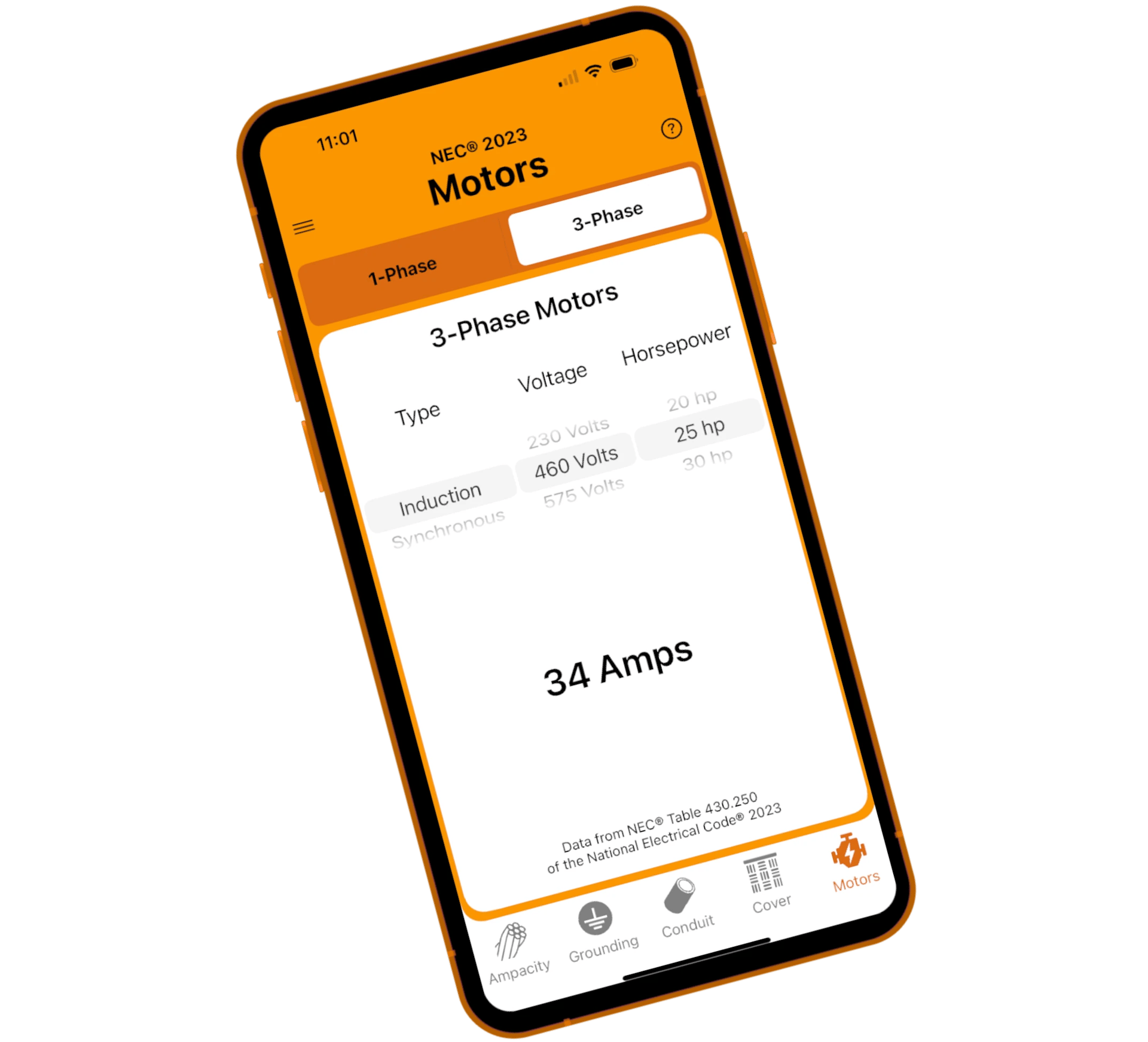
What are you waiting for?
There's no better time to improve your productivity. With NG Orange's™ high quality, easy-to-use mobile apps you'll get your jobs done quicker and with more accuracy.
Essential Construction apps for daily use!
Subscribe to our Email List

© 2024-2026 NG Orange LLC™